BIOMOLECULAR CONDENSATES AND LLPS
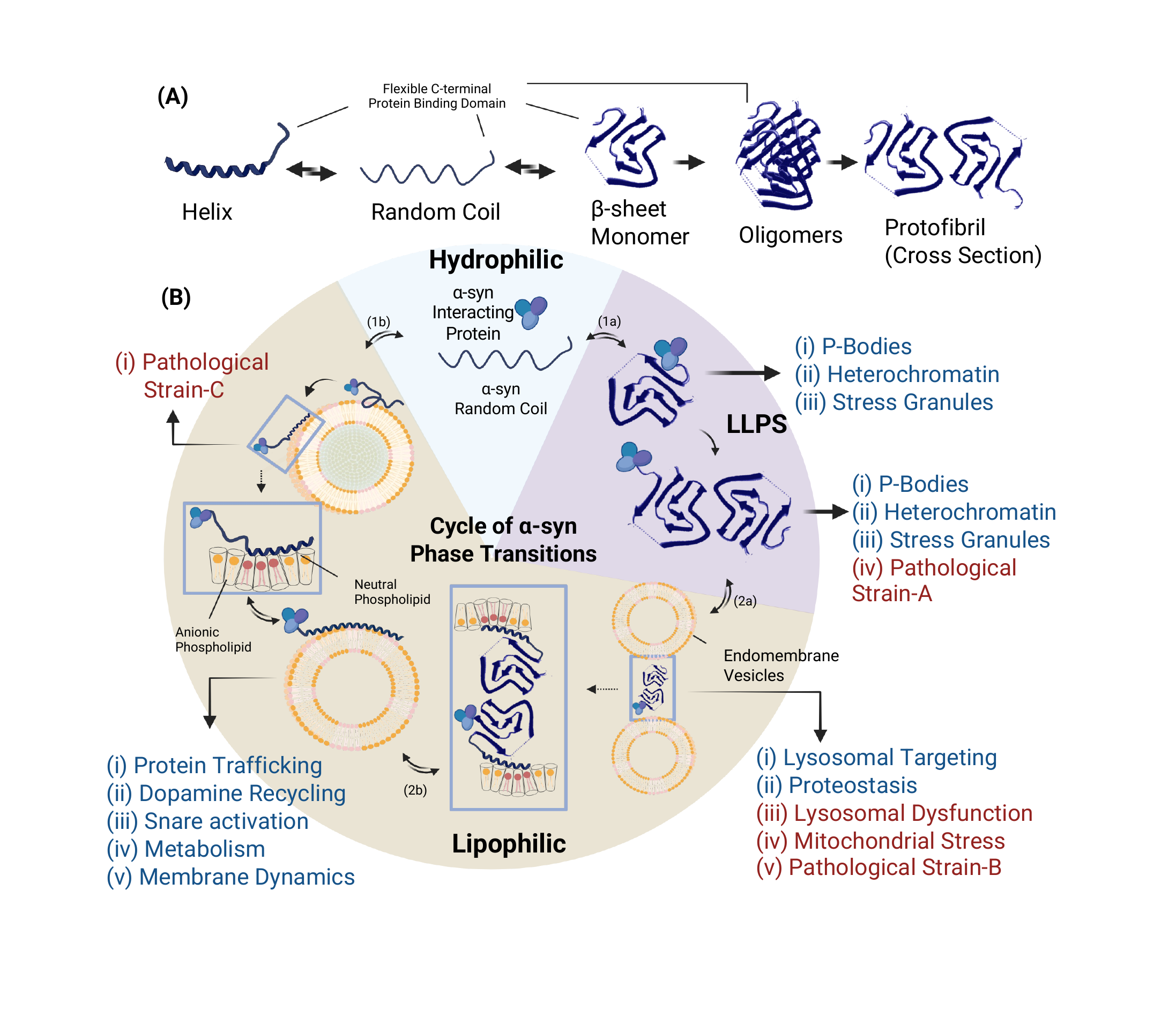
Biomolecular condensates concentrate proteins and nucleic acids without a surrounding membrane, allowing cells to organize biochemical reactions in space and time while remaining responsive to changing conditions. Liquid-liquid phase separation (LLPS) is one mechanism through which these assemblies form. We investigate how disease-associated proteins enter, modify and disrupt condensates in two complementary biological settings: the presynaptic active zone and chromatin.
PRESYNAPTIC ACTIVE ZONE AND ALPHA-SYNUCLEIN
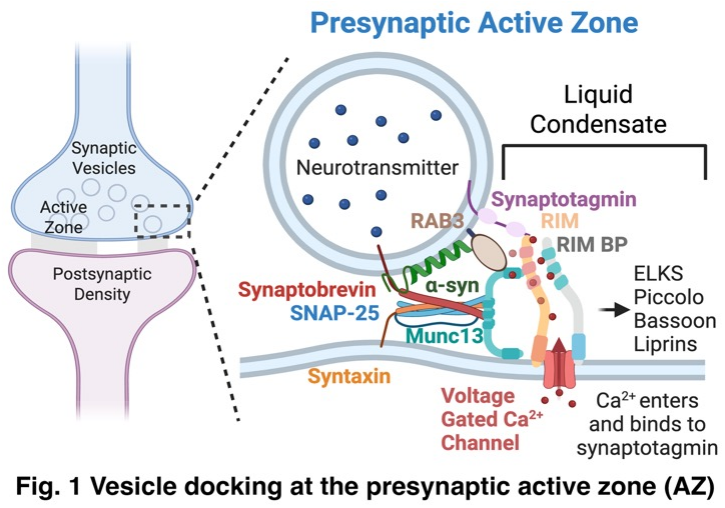
Neurotransmitter release depends on the precise spatial and temporal organization of the presynaptic active zone. Rather than functioning as a static scaffold, the active zone is assembled through dynamic interactions that concentrate synaptic vesicles, calcium channels and release machinery at defined sites. LLPS provides a mechanism through which these components can organize rapidly while remaining responsive to neuronal activity.
Alpha-synuclein is abundant at presynaptic terminals and is therefore positioned to influence these assemblies, yet it remains unclear whether it is recruited to active-zone condensates, modifies their material properties or disrupts their organization under disease-relevant conditions. We investigate the molecular interactions that govern condensate formation, determine how physiological and disease-associated states of alpha-synuclein alter condensate stability and dynamics, and connect these changes to the organization of presynaptic machinery and neurotransmitter release. This integrated approach will establish whether altered condensate behaviour provides an early mechanistic link between alpha-synuclein and synaptic dysfunction before large pathological aggregates are established.
TAU AND ALPHA-SYNUCLEIN IN CHROMATIN CONDENSATE FORMATION
Chromatin must remain sufficiently compact to organize the genome while preserving regulated access to DNA. This balance depends on dynamic interactions among DNA, histones and chromatin-associated proteins, including processes with condensate-like properties. Changes in these assemblies can therefore alter nuclear organization even when the proteins responsible are more commonly associated with cytoplasmic or synaptic pathology.
Tau and alpha-synuclein have distinct cellular functions, yet both can access nuclear environments and influence macromolecular organization. We compare how each protein alters chromatin condensate formation, organization and material behaviour, including the threshold for assembly, internal dynamics and persistence of the condensed state. Examining tau and alpha-synuclein within the same chromatin system allows us to distinguish general consequences of disease-associated protein accumulation from mechanisms specific to each protein. Together, these studies establish a nuclear dimension of protein-assembly biology in neurodegenerative disease.