
RESEARCH AT THE RYAN LAB
Human disease frequently emerges when changes in protein organization disrupt cellular metabolism, development and tissue function. The Ryan Lab combines protein biochemistry with human induced pluripotent stem cell (hiPSC)-derived neuronal, organoid and cardiac models to determine how dynamic protein assemblies contribute to neurological and cardiac disease.
BIOMOLECULAR CONDENSATES AND LIQUID-LIQUID PHASE SEPARATION
Cells organize many biochemical reactions within biomolecular condensates, dynamic assemblies that form without a surrounding membrane through processes that include liquid-liquid phase separation (LLPS). We investigate how these assemblies organize the presynaptic active zone and how alpha-synuclein alters their formation, material properties and effects on neurotransmission. In parallel, we determine how tau and alpha-synuclein influence chromatin condensates assembled from DNA and associated proteins. Together, these studies define how disease-associated proteins disrupt condensate biology in synaptic and nuclear environments.
AMYLOID FIBRILS
Amyloid diseases arise when normally soluble proteins misfold and assemble into ordered fibrils, yet the pathways that generate these structures depend on the protein and cellular environment. We investigate how metabolism and membrane binding regulate alpha-synuclein structure and fibril seeding, how alpha-synuclein promotes tau fibril formation, and how transthyretin (TTR) stability controls its transition from a native transport protein to pathogenic amyloid. This comparative program identifies shared principles of fibril formation while preserving the distinct biology of alpha-synuclein, tau and TTR.
HUMAN MODELS OF DEVELOPMENT AND DISEASE
We develop cerebral organoids and microfluidic systems to evaluate the impact of choroid plexus-secreted factors in neural development, 2D and 3D hiPSC-derived models of neurodegeneration, and hiPSC-derived cardiac models of heart failure and ATTR amyloidosis.
RESEARCH AT THE RYAN LAB
Human disease frequently emerges when changes in protein organization disrupt cellular metabolism, development and tissue function. The Ryan Lab combines protein biochemistry with human induced pluripotent stem cell (hiPSC)-derived neuronal, organoid and cardiac models to determine how dynamic protein assemblies contribute to neurological and cardiac disease.
BIOMOLECULAR CONDENSATES AND LIQUID-LIQUID PHASE SEPARATION
Cells organize many biochemical reactions within biomolecular condensates, dynamic assemblies that form without a surrounding membrane through processes that include liquid-liquid phase separation (LLPS). We investigate how these assemblies organize the presynaptic active zone and how alpha-synuclein alters their formation, material properties and effects on neurotransmission. In parallel, we determine how tau and alpha-synuclein influence chromatin condensates assembled from DNA and associated proteins. Together, these studies define how disease-associated proteins disrupt condensate biology in synaptic and nuclear environments.
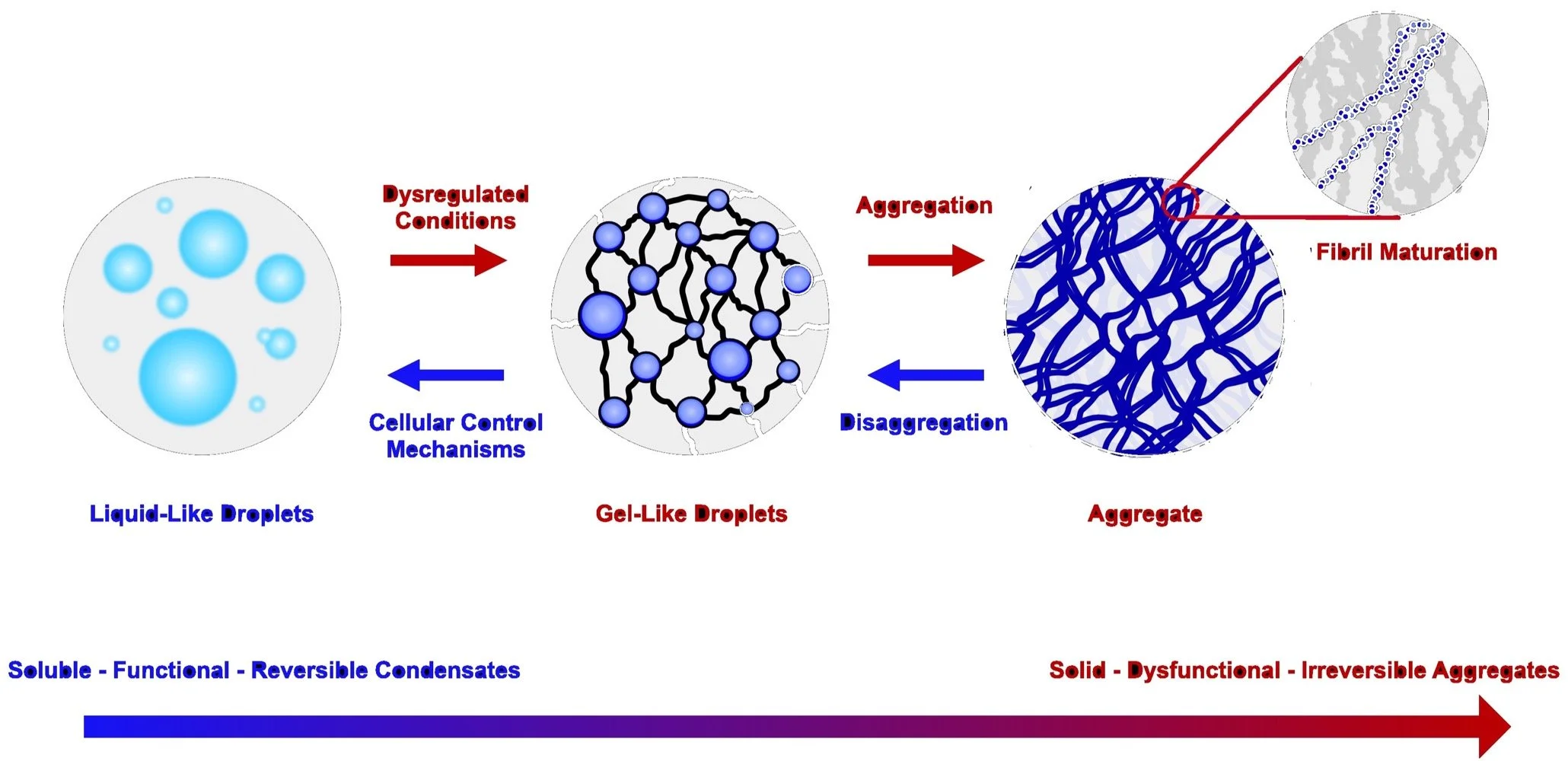
Fibrillization resulting from the phase transition of condensates from liquid to solid. Liquid-like condensates can undergo maturation into less dynamic, solid-phase assemblies. Specific experimental conditions promote fibril formation within or at the interface of condensates, whereas other condensates remain reversible or follow pathways that are partly independent of fibrillation. Illustration created using Affinity Suite.
AMYLOID FIBRILS
Amyloid diseases arise when normally soluble proteins misfold and assemble into ordered fibrils, yet the pathways that generate these structures depend on the protein and cellular environment. We investigate how metabolism and membrane binding regulate alpha-synuclein structure and fibril seeding, how alpha-synuclein promotes tau fibril formation, and how transthyretin (TTR) stability controls its transition from a native transport protein to pathogenic amyloid. This comparative program identifies shared principles of fibril formation while preserving the distinct biology of alpha-synuclein, tau and TTR.
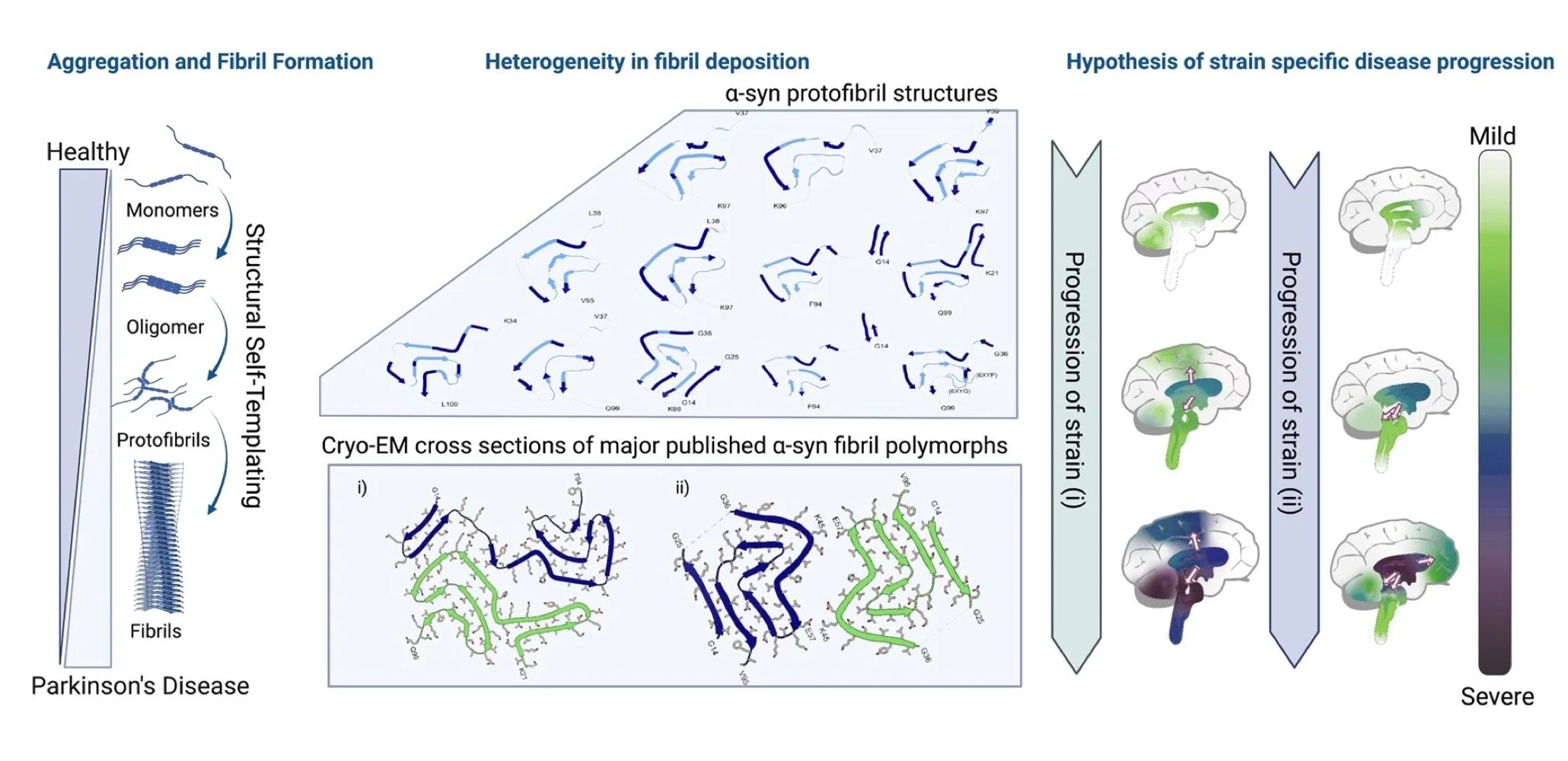
Schematic illustrating the self-templating of misfolded protein monomers into oligomers and protofibrils that mimic the structure of the original misfolded seed. These protofibrils give rise to fibril “strains” that propagate in neurodegenerative disease (ND). The strain hypothesis proposes that distinct structural strains spread through different brain regions, disrupting local neural networks and giving rise to discrete neurological phenotypes. Thus, strains (i) and (ii) result in different disease subtypes.
HUMAN MODELS OF DEVELOPMENT AND DISEASE
We develop cerebral organoids and microfluidic systems to evaluate the impact of choroid plexus-secreted factors in neural development, 2D and 3D hiPSC-derived models of neurodegeneration, and hiPSC-derived cardiac models of heart failure and ATTR amyloidosis.
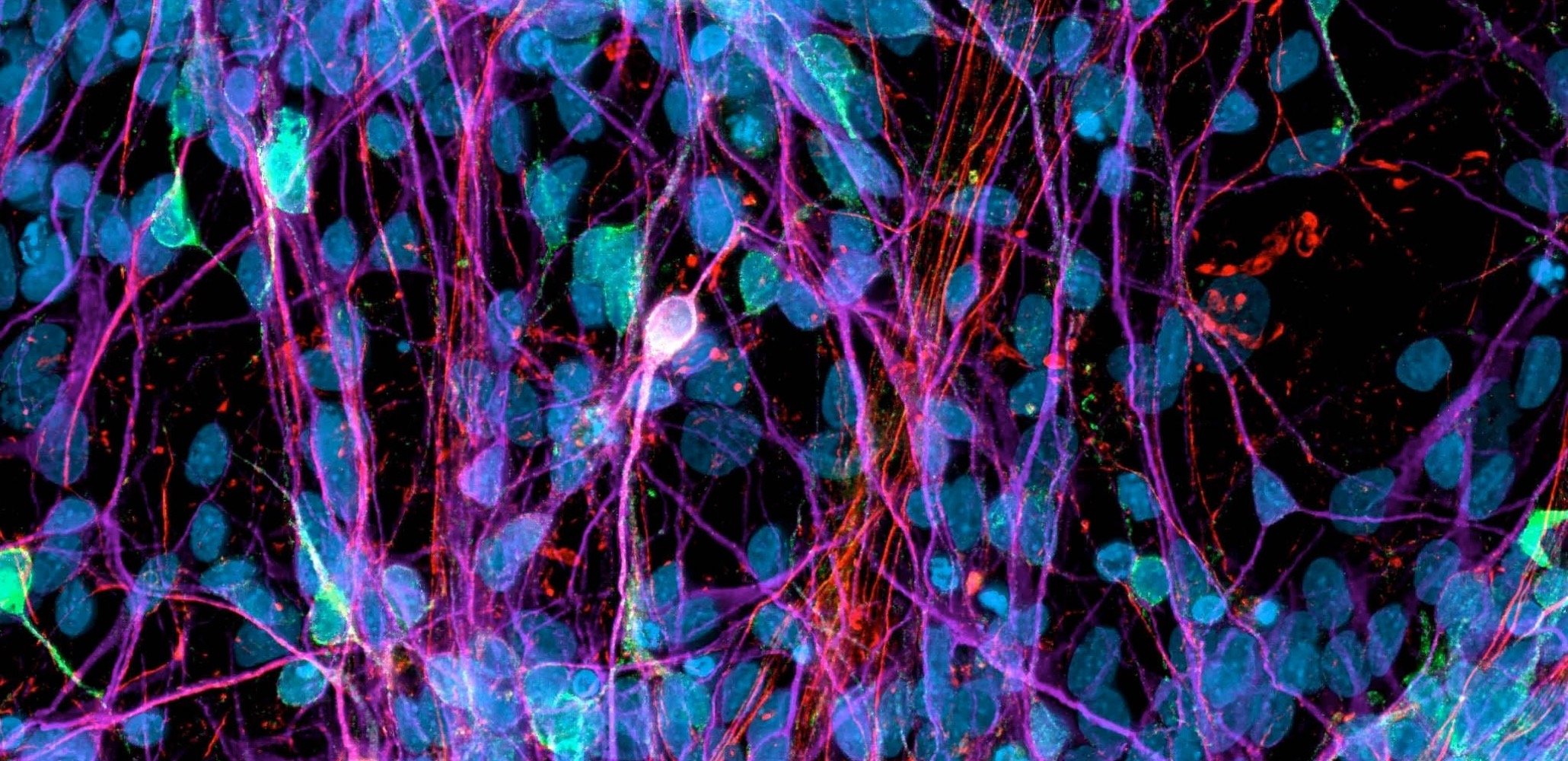
hiPSC-derived human neurons from a person with Parkinson’s disease labelled for Tuj1 (purple) and TH (green), showing accumulated hyperphosphorylated alpha-synuclein (red).
Hello, World!